
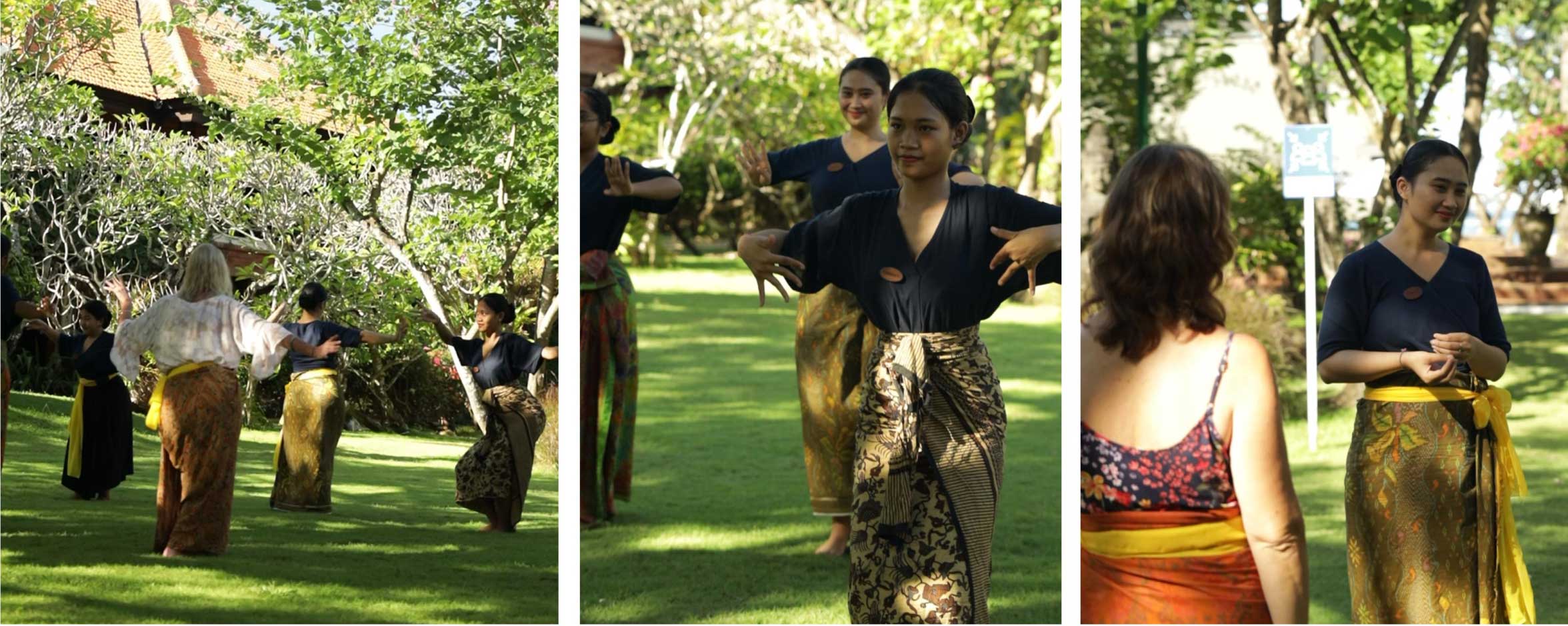
Puspanjali Dance
A TRADITIONAL BALINESE WELCOME DANCE
Overview:
Puspanjali is a traditional Balinese welcome dance that is often performed at the beginning of ceremonies or cultural events to greet and honor guests. The word Puspanjali comes from Sanskrit, where puspa means “flower” and anjali means “offering” or “salutation.” Thus, Puspanjali can be interpreted as “an offering of flowers as a welcoming gesture.”
Cultural Significance:
The dance symbolizes hospitality, respect, and joy in receiving guests. It reflects the values of Balinese society, where visitors are treated with high regard and are considered blessings. Through graceful movements and serene expressions, the dancers convey a heartfelt welcome.
Choreography and Style:
Puspanjali is performed by a group of female dancers, usually 4–8, dressed in vibrant traditional attire. Their movements are elegant and precise, featuring a combination of soft hand gestures (mudras), eye expressions (seledet), and intricate footwork. The dancers carry flower offerings, which they use as part of the performance, enhancing the beauty and spiritual feel of the dance.
The choreography blends classical Balinese dance techniques with stylized group formations, making it visually engaging and harmonious.
Music:
The dance is accompanied by a traditional Balinese gamelan orchestra, specifically Gamelan Gong Kebyar. The music is dynamic and rhythmic, matching the dancers’ precise movements and emphasizing changes in emotion and energy throughout the performance.
Modern Context:
Though rooted in tradition, Puspanjali is also performed in contemporary settings such as tourism events, art festivals, and international showcases, representing Balinese culture with pride and grace.